
24th Annual Conference · Scope
Higher Education in the Arab World
Artificial Intelligence-Driven Economic Development through Creative Research
01 · Prelude
Universities as economic assets
Higher education in the Arab world is undergoing a profound transformation as Artificial Intelligence (AI) reshapes global economic systems, innovation processes, and labor markets. In the AI age, universities are no longer expected to serve only as centers of teaching and scholarship; they are increasingly positioned as strategic drivers of economic development, competitiveness, and knowledge-based growth. For Arab economies seeking diversification, productivity gains, and long-term resilience, higher education institutions represent a critical economic asset.
Across the region, national development visions and artificial intelligence strategies emphasize innovation, digital transformation, and human capital development as foundations for future growth. These priorities place universities at the center of economic transformation agendas, with growing expectations for creative research, AI-enabled innovation, and meaningful engagement with industry and public policy. Meeting these expectations requires rethinking the role of higher education in the economy and strengthening its capacity to generate measurable economic impact.
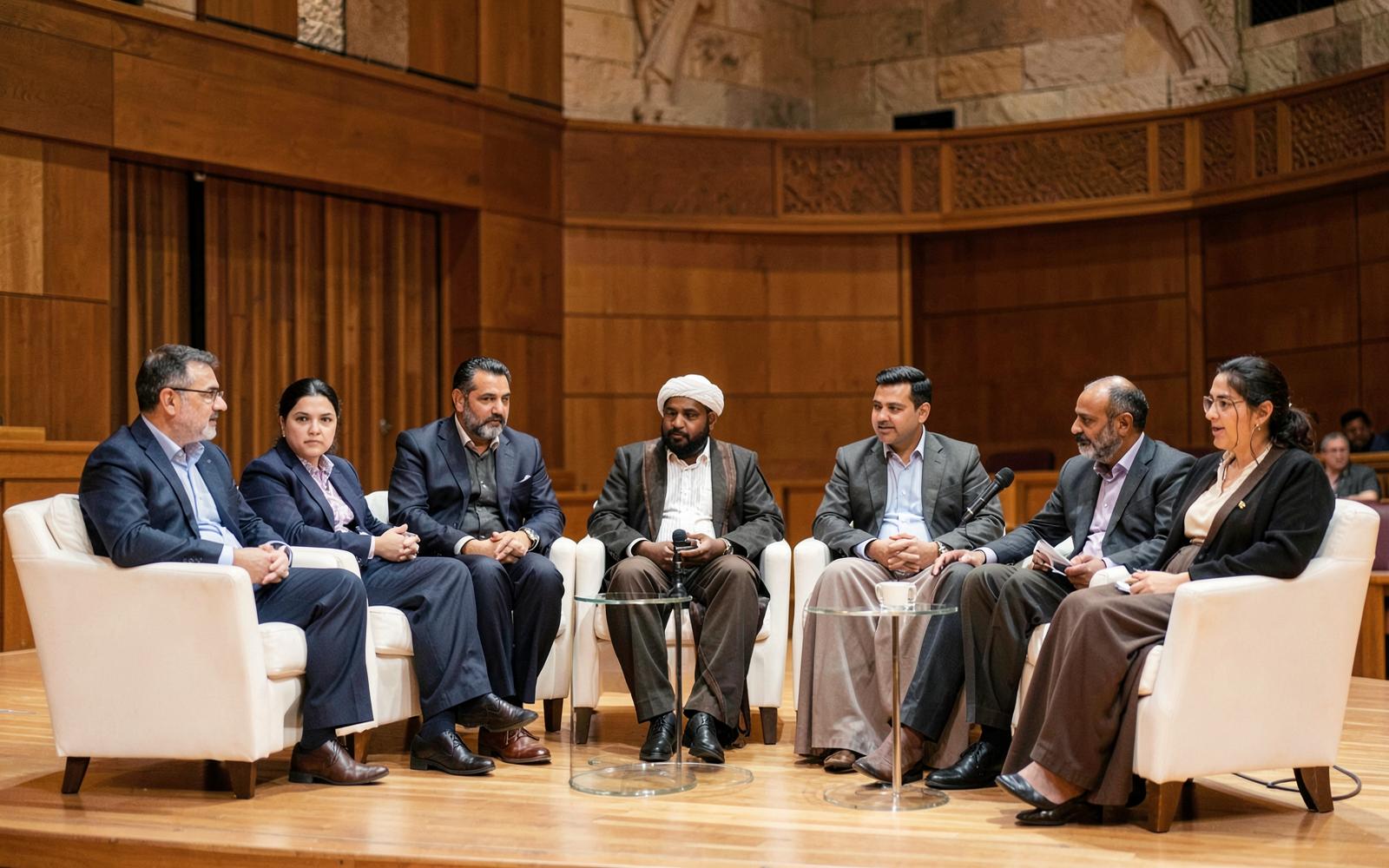
This conference is conceived as a regional platform to examine how higher education in the Arab world can drive economic development in the AI age through creative research, institutional reform, and strategic collaboration. It aims to reposition universities as engines of growth while preserving academic integrity, social responsibility, and cultural relevance.
02 · Background and Context
Adaptation, not replication
Artificial intelligence is reshaping the global economy, redefining how value is created, how innovation unfolds, and how societies organize work. In higher education, AI is accelerating discovery, enabling data-driven research, and opening new avenues for collaboration between universities, industry, and government. Leading institutions worldwide have already embedded AI into their strategies, turning academic excellence into economic impact through entrepreneurship, technology transfer, and innovation ecosystems.
In the Arab world, universities operate within diverse national contexts yet share common challenges in the AI era. While governments and institutions are investing in AI strategies, digital infrastructure, and research initiatives, gaps remain in research capacity, interdisciplinary integration, and the translation of academic knowledge into tangible economic outcomes. Too often, higher education remains disconnected from labor market needs, industrial priorities, and long-term development planning.
Creative research offers a way forward. In the AI age, it means using artificial intelligence not only as a technical tool but as a driver of novel insights, applied solutions, and economically relevant knowledge. When embedded in higher education systems, creative research can spark entrepreneurship, strengthen emerging sectors, guide public policy, and contribute directly to sustainable economic growth.
Global experience shows that universities can become powerful economic actors when AI is treated as a strategic enabler rather than a niche discipline. For Arab universities, the task is not replication but adaptation—drawing lessons from international models while aligning them with regional priorities, institutional capacities, and cultural values. Success will depend on building strong links between academia, industry, and government, nurturing talent, and ensuring that AI-driven innovation serves both economic competitiveness and societal well-being.
03 · Conference Objectives
Six objectives for the AI age
- 01
Make higher education a key driver of economic growth in AI-based economies across the Arab world by aligning teaching, research, and innovation with national development and productivity goals.
- 02
Encourage innovative research using AI that creates real economic value by solving priority problems in areas such as health, energy, education, and smart cities.
- 03
Strengthen the role of universities in building knowledge economies, innovation, and entrepreneurship through start-ups, technology transfer, and industry-linked research.
- 04
Improve leadership, governance, and policies in universities to support the effective, ethical, and impactful use of AI in teaching, research, and administration. Prepare graduates and researchers with AI and digital skills that match future job market needs and support workforce productivity and employability.
- 05
Strengthen cooperation between universities, industry, and government to accelerate the translation of research into products, services, and public-sector solutions.
- 06
Provide reliable evidence and analysis to guide policymaking in higher education, AI, and economic development across the region.
04 · Conference Themes
Eight themes, one economic centre
The themes place economic development at the center of all discussions, positioning AI and higher education as strategic enablers.
- Theme 01
AI-Driven Research for Economic Impact
How universities can use AI to address national priorities, solve industry problems, and generate commercially and socially valuable research outcomes.
- Theme 02
Universities as Engines of Innovation and Entrepreneurship
Building start-up ecosystems, technology transfer offices, incubators, and venture partnerships to turn research into scalable ventures.
- Theme 03
Developing AI-Ready Human Capital
Reforming curricula, pedagogy, and lifelong learning to prepare graduates and professionals for future AI-powered labor markets.
- Theme 04
Creative and AI-Enabled Research for Economic Value Creation
From research excellence to commercialization, innovation, and market impact.
- Theme 05
Leadership, Governance, and Policy for AI Transformation
Institutional strategies, regulatory frameworks, ethics, and funding models that enable responsible and impactful AI integration.
- Theme 06
University–Industry–Government Collaboration in the AI Era
Creating effective triple-helix partnerships to accelerate knowledge transfer, co-innovation, and policy alignment.
- Theme 07
Global Economic Models and Lessons for the Arab World
Adapting international experiences to Arab economic and institutional contexts.
- Theme 08
Measuring Impact: From Rankings to Economic Value
New metrics, benchmarking, and evaluation models to assess universities' contribution to productivity, innovation, and national competitiveness.
05 · Expected Outcomes
What the conference will produce
- 1
Scholarly outputs with economic relevance, including peer-reviewed proceedings and special journal issues.
- 2
Strategic policy briefs and institutional frameworks linking higher education, AI, and economic development.
- 3
Strengthened research and innovation capacity through interdisciplinary networks and collaborative projects.
- 4
Enhanced university–industry partnerships supporting commercialization, startups, and applied research.
- 5
Improved human capital development outcomes, including AI-informed curricula and professional training.
- 6
Regional benchmarking and knowledge exchange on higher education's economic role in the AI age.
- 7
Sustained regional impact, including the establishment of ongoing platforms or networks for collaboration.
06 · Concluding Perspective
By centering economic development within the discourse on higher education and artificial intelligence, this conference positions universities as strategic assets for the Arab world in the AI age. Through creative research, institutional transformation, and cross-sector collaboration, higher education can play a decisive role in shaping innovative, resilient, and knowledge-driven economies. This conference seeks not only to analyze this transformation, but to actively contribute to it by aligning research, policy, and practice around shared economic development goals.