
Orlando, USA
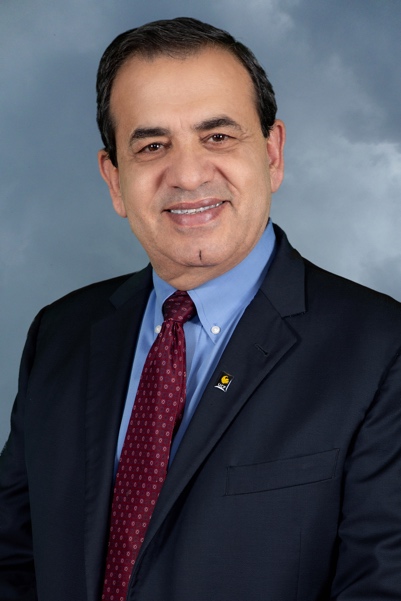
Issa Batarseh
Pegasus Professor of Electrical Engineering, University of Central Florida
AI-Driven Grid-Forming Resilient Power Systems: LSTM-Based Predictive Power-Angle Control
Sandy Miguel, Yousef Abudyak, Issa Batarseh
University of Central Florida, Orlando, Florida, USA
Abstract
AI-Driven Grid-Forming Resilient Power Systems: LSTM-Based Predictive Power-Angle Control
Due to the fast, nonlinear dynamics introduced when grid-forming inverters enter current-limited operation during faults, transient stability support becomes challenging because voltage collapse and power-angle divergence can unfold within only a few control cycles, leaving purely threshold-based power-angle limiting with insufficient foresight. To address this challenge, this work develops an online predictive power-angle limiting framework that uses short-horizon PCC voltage forecasting to proactively regulate the admissible inverter power angle before critical conditions fully materialize. First, the voltage prediction task is formulated as a multi-step time-series problem in which a recurrent network maps a short window of recent PCC voltage measurements to a forward voltage trajectory. Second, a lightweight LSTM predictor is trained on diverse fault-driven voltage transients to learn the temporal signatures of impending sags and recovery under current saturation. Third, the predicted voltage envelope, specifically, the anticipated minimum over the horizon, is used to compute a time-varying power-angle bound that automatically tightens for severe predicted sags and relaxes as the voltage is expected to recover. Finally, by embedding the predictor within the grid-forming control loop and evaluating it under real-time execution constraints, we show how predictive limiting can provide disturbance-dependent, anticipatory action that is fundamentally different from reactive saturation while preserving the intended grid-forming behavior during fault transients.
Biography
Issa Batarseh
Dr. Issa Batarseh is a Pegasus Professor of Electrical Engineering at the University of Central Florida (UCF) and serves as the Director of the Florida Power Electronics Center (FPEC). He earned his B.S. degree in Electrical and Computer Engineering and his M.S. and Ph.D. degrees in Electrical Engineering from the University of Illinois at Chicago in 1983, 1985, and 1990, respectively. Dr. Batarseh's work focuses on solar energy conversion technologies, particularly in high-frequency, high-efficiency, and smart grid-tied photovoltaic (PV) energy systems. His research team has led the design, development, and commercialization of transformative technologies, including smart microinverters, which have significantly improved energy efficiency and accessibility. These innovations have been instrumental in advancing renewable energy adoption, optimizing energy conversion, and reducing greenhouse gas emissions, benefiting modern clean energy systems worldwide. Dr. Batarseh has authored over 110 journal articles, 450 conference papers, and holds 40 issued U.S. patents. He has mentored 45 Ph.D. and 45 M.S. students, many of whom have contributed to leading advancements in academia and industry. He is the author of the highly referenced textbook, *Power Electronics—Circuit Analysis and Design* (2nd Edition, Springer, 2018). His contributions to renewable energy have earned him numerous accolades, including the 2025 IEEE Medal for Environmental and Safety Technologies, and the prestigious IEEE PELS R. David Middlebrook Achievement Award and UCF's Pegasus Professor Award, the university's highest academic honor. He is a Fellow of both IEEE and AAAS, a member of the National Academy of Inventors (NAI), and an inductee into the Florida Inventors Hall of Fame. In 2025, he was short listed for the [*Global Energy Prize.*](https://www.prnewswire.com/news-releases/the-shortlist-for-the-2025-global-energy-prize-announced-302486376.html) Dr. Batarseh has co-founded three start-up companies–-Petra Solar, Advanced Power Electronics Corporation (ApECOR), and Portium Power Systems, Inc.–-each contributing to the commercialization of innovative energy solutions. From 2010 to 2014, Dr. Batarseh served as the President of Princess Sumaya University for Technology (PSUT) in Amman, Jordan. He is also a Registered Professional Engineer in the State of Florida.