
Doha, Qatar
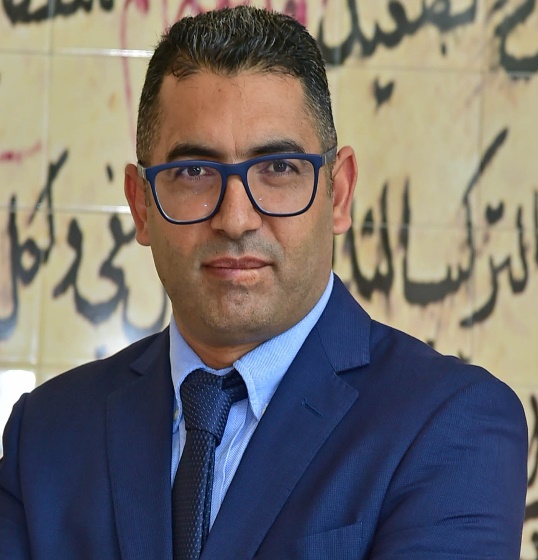
Lanouar Charfeddine
Professor of Economics, Qatar University
Do National AI Strategies Turn Arab Universities into Engines of Entrepreneurship?
Lanouar Charfeddine
College of Business and Economics, Qatar University
Abstract
Do National AI Strategies Turn Arab Universities into Engines of Entrepreneurship?
Governments across the Middle East and North Africa (MENA) are increasingly prioritizing national artificial intelligence strategies (NAS) as a cornerstone for economic diversification and the shift toward knowledge-based development. While pioneers like the United Arab Emirates adopted such strategies as early as 2017, followed by nations like Qatar, Egypt, Saudi Arabia, and Jordan, many other regional players have yet to formalize their AI frameworks. Despite the significant public funding and high-level policy focus dedicated to these initiatives, the existing literature lacks rigorous causal evidence regarding whether NAS adoption actually stimulates measurable growth in university-linked entrepreneurial activity. This research addresses this critical gap by utilizing the Triple Helix model and National Innovation Systems theory to hypothesize that NAS adoption activates key knowledge spillover channels including increased R&D funding, strengthened university–industry linkages, and the development of AI-ready human capital to foster the creation of knowledge-intensive ventures. To identify the impact of these policies, the study treats the staggered timing of NAS adoption across 18 MENA economies between 2006 and 2024 as a natural experiment. The methodology employs the Callaway and Sant'Anna (2021) estimator, a doubly robust approach that avoids the technical biases of traditional regression models when treatment timing varies across different countries. The analysis integrates a comprehensive panel dataset from sources such as the World Bank and the Global Innovation Index to estimate group-time average treatment effects and conduct dynamic event studies. This rigorous design not only tests the parallel trends assumption to ensure valid comparisons but also includes a detailed mechanism analysis to determine if entrepreneurial gains are specifically driven by factors like digital infrastructure expansion, business sophistication, or university-industry R&D collaboration. This research provides the first causal evidence on the entrepreneurial impact of AI strategies within the Arab world, offering a significant advancement over the descriptive and correlational studies that currently dominate regional policy evaluation. By demonstrating the practical application of advanced difference-in-differences methodologies in developing economies, the study provides evidence-based guidance for governments looking to activate the university–venture pipeline. Ultimately, the findings inform the design of AI governance frameworks that maximize knowledge spillovers from higher education institutions to the broader ecosystem, providing a roadmap for MENA countries to transition from resource-dependent to knowledge-driven economies through strategic investments in tertiary education and research capacity.
Biography
Lanouar Charfeddine
Dr. Charfeddine Lanouar is a Full Professor of Economics at Qatar University's College of Business and Economics. He holds two research master's degrees and a Ph.D. in Applied Econometrics from the University of Paris II–Panthéon-Assas, France, and has taught across France, Tunisia, Saudi Arabia, and Qatar. His research spans applied econometrics, energy economics, international macroeconomics, finance, fintech, entrepreneurship, forecasting, and policy-oriented economic transformation. He has published more than 65 peer-reviewed articles in leading international journals and has accumulated over 9,400 Google Scholar citations, with an h-index of 42. He has also been listed among the world's Top 2% Scientists in the Stanford/Elsevier Scopus-based database. Dr. Lanouar has secured more than USD 5 million in competitive research funding as LPI or PI, including major NPRP and externally funded projects. Several of his papers have received best paper awards and achieved high citation and download impact. He has also contributed to policy engagement through conferences, forums, Ministry workshops, policy briefs, and leadership of the Research and Policy Unit at Qatar University's Center for Entrepreneurship and Organizational Excellence.