Amman, Jordan
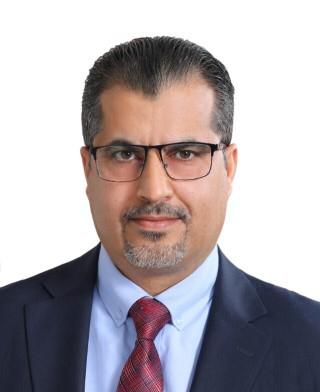
Rami A. Abdel-Rahem
President, University of Petra
Scientific Researcher in AI Era: Opinions from the University of Petra
Rami A. Abdel-Rahem, Wael Hadi, Faisal Aburub, and Mayyas Al- Remawi
University of Petra, Amman, Jordan
Abstract
Scientific Researcher in AI Era: Opinions from the University of Petra
Since 2022, artificial intelligence (AI) has shown extensive applications across most aspects of our lives, and scientific research is no exception. Some AI applications, such as ChatGPT, can now conduct broad literature reviews, provide scientific interpretations, write scientific papers, and respond to reviewer comments, which changes the researcher's role. With such machine intelligence, it is currently unclear what the remaining contribution of human intelligence is compared with AI. Scientific promotion, PhD and master's theses, graduation projects, seminars, presentations, quizzes, and homework can all be generated by AI, and the three categories of education outcomes, knowledge, skills, and competencies that the researcher should gain are nowadays at risk if AI is not used properly. Higher education institutions (HEIs), along with many international organizations, have begun drafting regulations and policies to address the challenges of AI revolution, maintain human intellectual efficiency, leverage AI's benefits, and avoid its potential dangers. AI declaration forms and AI usage percentages were proposed to regulate the use of AI while maintaining the role of human intellectual effort. In general, the use of AI to enhance the language of scientific research and to collect updated references has been accepted; however, generating ideas with AI has been prohibited. It may be that the new researcher will be the one who is able to use AI prompts rather than possessing many other classical skills, and that the rules of scientific promotion will no longer be valid. In the current investigation, we conduct a literature review of best practices for the use of AI in scientific research. Additionally, the questionnaire results, which reflect the opinions of the University of Petra (UOP) faculty members on the use of AI in scientific research, are presented and discussed.
Biography
Rami A. Abdel-Rahem
Prof. Rami A. Abdel-Rahem was born in 1974 in As Sarih, Jordan. He studied applied chemistry at the Jordan University of Science and Technology and earned his PhD in 2003 from Bayreuth University in Germany, under the supervision of Prof. Dr. Heinz Hoffmann. From 2003 to 2011, he served as an assistant professor of physical chemistry at the University of Al-Margeb in Libya and King Faisal University in Saudi Arabia. In 2011, he was promoted to associate professor at King Faisal University. In 2013, he moved to the University of Petra in Jordan, where he was promoted to full professor in 2017. Prof. Abdel-Rahem has held several leadership roles at the university, including Head of the Chemistry Department, Vice Dean of the Faculty of Arts and Sciences, and Dean of the Faculty of Arts and Sciences. Since September 2022, he has been serving as the President of the University of Petra (UOP). His research interests include surfactant properties, rheology, electron microscopy, phase behavior, corrosion, and the physical properties of polymer composites. He is also passionate about improving the quality of education and integrating artificial intelligence into educational practices.